


An R-value insulation chart helps homeowners understand how well insulation resists heat flow. R-value is useful for comparing materials, but it is not the only factor that matters. The appropriate R-value depends on the home, climate, building design, and installation method. At The Green Cocoon, homeowners can look at these factors together when planning an insulation upgrade.
If your home has cold rooms, hot upper floors, drafts, or rising heating and cooling costs, insulation may need attention. Learning how R-value works can help you make a better choice.
Key Takeaways
- Higher R-value generally means greater resistance to heat flow.
- Thickness, material, and density can affect the rating.
- Recommended R-values can vary by climate and building area.
- Installation quality can affect real-world performance.
- Air sealing and moisture control should be considered too.
What Is R-Value?
R-value measures a material’s resistance to heat flow. It shows how difficult it is for heat to pass through insulation. A higher number means more resistance under the conditions used for the rating. However, the number should be viewed with the material, thickness, and building assembly in mind.
R-value is one useful part of an insulation guide, not a complete score. Two materials can have different ratings per inch and still suit different spaces.
- Higher R-value means greater resistance to heat flow.
- More thickness can increase total resistance.
- Gaps and compression can lower installed performance.
How Does an R-Value Insulation Chart Work?
An R-value insulation chart usually compares materials and their typical thermal resistance. Some charts show R-value per inch, while others show the rating for a complete product or installed layer. Knowing this difference is important because a product with a higher value per inch may need less thickness to reach a target.
The U.S. Department of Energy explains that recommended levels can vary by climate zone and by the part of a home being insulated. A chart is a useful starting point, not a complete project plan.
Why Does Insulation R-Value Matter?
Insulation R-value matters because heat naturally moves from warmer areas toward cooler areas. In winter, heat can move from a heated home toward the outdoors. In summer, outdoor heat can move into cooler rooms. Insulation slows this movement and helps indoor temperatures stay more stable.
A suitable rating can support comfort and reduce heating and cooling work. Still, insulation does not work alone. Air leaks, windows, doors, ducts, and moisture also affect results.
What Can Affect the Final Rating?
The printed number is important, but installed performance can be different. Building condition and installation quality both matter.
- Material thickness and density
- Gaps, compression, or uneven coverage
- Moisture and air movement
- Installation method and location
Understanding Thermal Resistance
Thermal resistance describes how strongly a material resists heat transfer. R-value is the common rating used for this purpose in insulation. As the rating increases, heat generally moves more slowly through the material under the test conditions.
The highest-rated product is not always the best choice. An attic, wall, floor, or roof assembly can have different needs. The insulation must fit the space and building system.
Does Thickness Increase R-Value?
Adding more of the same insulation generally increases its total resistance. However, extra material cannot fix every problem. If air moves around insulation through cracks or openings, heat can still escape through those paths.
- More thickness can increase total resistance.
- Complete coverage helps limit heat movement.
- Air sealing may be needed before or with insulation.
R-Value of Common Insulation Materials
Different insulation materials can provide different levels of thermal resistance per inch. Their structure, density, and installation method all affect performance. This is why comparing materials only by name can lead to a poor choice.
The Department of Energy explains that R-value depends on insulation type, thickness, and density. It also recommends considering location and climate when selecting a level.
What Is the Spray Foam R-Value?
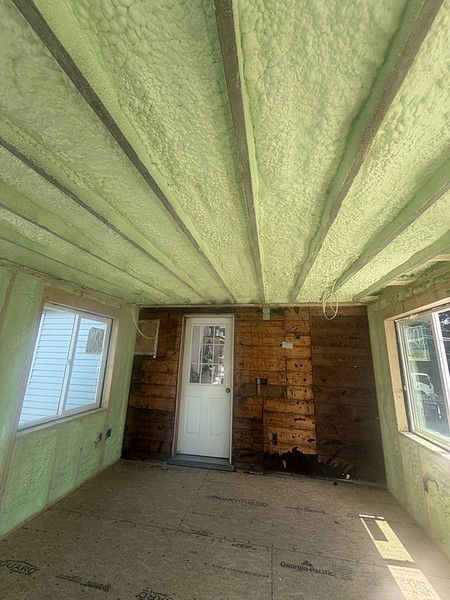
Spray foam R-value varies by product and whether the foam is open-cell or closed-cell. Closed-cell foam generally offers more resistance per inch, which can be useful where space is limited. Open-cell foam can provide air sealing and sound control when enough depth is available.
The Green Cocoon offers both types of spray foam. Homeowners can review its technical specifications before discussing which option may suit their project.
What Is the Fiberglass R-Value?
Fiberglass R-value depends on the specific product, thickness and form. Fiberglass is commonly available as batts, rolls, or loose-fill material. It can work well in suitable walls, floors, ceilings, and attic areas.
Fiberglass can provide useful resistance with good coverage. Gaps, compression, or poor fitting can reduce effectiveness. The goal is consistent coverage across the intended area.
What Is the Cellulose R-Value?
Cellulose R-value varies with product and installation method. Cellulose is often blown into attics and wall cavities, where it can spread around framing and other obstacles. Its final performance depends on the amount installed and how well the area is prepared.
Before installation, check for moisture and air leaks. The Green Cocoon offers cellulose insulation.
Why Does R-Value Change by Location?
The R-value needed in one part of a home may not be the same as another. Attics, walls, floors, and roof assemblies experience different heat flows and have different construction limits. Climate also affects the level of resistance that may be appropriate.
Colder areas may need more protection against heat loss, while warmer areas may focus more on slowing heat gain. The Department of Energy provides climate-based guidance.
Attics, Walls, and Floors
Before choosing an insulation level, identify the area being improved. Construction details affect the material and installation method.
- Attics often need strong thermal protection.
- Walls may have limited cavity depth.
- Floors and crawl spaces may have moisture concerns.
Does a Higher R-Value Always Mean Better?
A higher R-value can be useful, but it does not automatically make one insulation system better. A high-rated product installed with gaps may perform worse than a lower-rated product installed correctly with full coverage.
The complete building system matters. Air sealing, moisture control, thermal bridges, ventilation, and installation quality can all influence insulation performance. Building Science Education notes that gaps, voids, compression, and poor alignment can reduce the effectiveness of high-R insulation.
Why Does Installation Matter?
Even a strong product can lose effectiveness when it is poorly installed. Small gaps can create paths for heat and air to move around insulation. Correct thickness also matters because a product cannot provide its intended resistance when it is installed too thinly.
A careful installation should provide:
- Consistent coverage
- Correct thickness
- Proper fit around obstacles
- Appropriate air sealing
How to Read an R-Value Insulation Chart
Reading an R-value insulation chart is easier when you know what each number represents. First, check whether the chart gives a rating per inch or for the full product. Next, consider the material, thickness, and location. Finally, compare those details with the home’s climate and construction.
Do not use a generic chart as the only basis for an insulation project. Local requirements can differ.
What Should Homeowners Compare?
A useful comparison should include more than the number on a product label. Consider the full needs of the project before selecting an insulation material.
- R-value and thickness
- Air sealing needs
- Moisture conditions
- Installation method
- Budget and long-term goals
How R-Value Supports Insulation Performance
Good insulation performance comes from the combination of material, thickness, placement, and installation. The goal is to slow unwanted heat movement while supporting the building envelope.
For example, a home may have plenty of attic insulation but still feel drafty because air leaks around openings. Another home may need repairs before more insulation is added. This is why a whole-area review can be more useful than simply choosing the highest available rating.
When Should You Check Insulation?
Consider an insulation review when rooms feel uneven, drafts are common, or energy costs seem high. Older homes may also benefit from an assessment.
Before adding new material, check for moisture, air leakage, damaged insulation, and areas with poor coverage. Addressing these issues first can help the new insulation perform better.
- Uneven room temperatures
- Drafts near walls or ceilings
- Thin, damaged, or missing insulation
- Moisture or condensation concerns
Final Thoughts
An R-value insulation chart is a useful tool for understanding how insulation resists heat flow and for comparing different products. However, the number on a chart is only the beginning. You also need to consider location, thickness, climate, air sealing, moisture, and installation quality.
Contact The Green Cocoon today to discuss your insulation project and find an insulation solution that fits your home’s needs.