


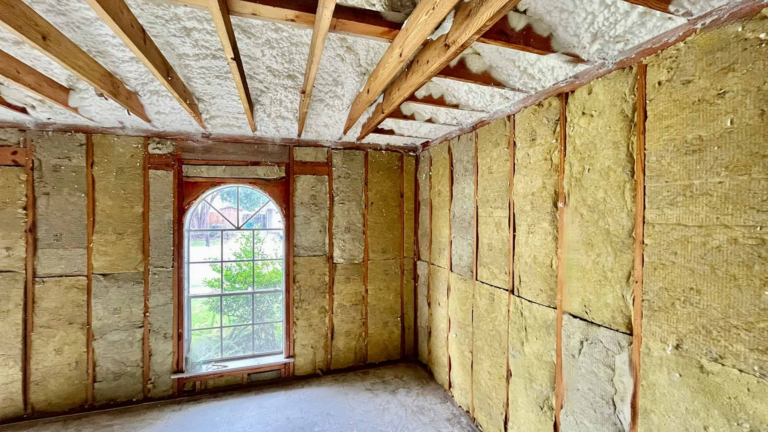
Closed cell insulation is a popular choice for homeowners who want strong thermal protection, better air sealing, and added moisture resistance. Unlike some traditional insulation materials, this dense foam can fill small gaps and create a more continuous barrier around parts of a home. For homeowners, builders, and property owners, understanding how it works can make it easier to decide if it is right for a project.
At The Green Cocoon, insulation choices are based on the needs of the building, not simply the material. Factors such as the age of the property, available space, moisture conditions, and energy goals can all affect which insulation solution makes sense.
Key Takeaways
Closed cell foam can offer several benefits in one application. It provides strong insulation, helps limit air movement, and can resist moisture when installed correctly. However, it can cost more than some other insulation options and requires careful installation.
- It provides a high insulation value in a relatively thin layer.
- It can reduce unwanted air movement through gaps and cracks.
- Its dense structure offers good moisture resistance.
- It works well where installation space is limited.
- Professional installation helps achieve consistent coverage.
What Is Closed Cell Insulation?
Closed cell insulation is a type of spray foam made up of tiny sealed cells. These cells give the material its dense structure and help slow heat movement. When sprayed onto a suitable surface, the foam expands and bonds to the area, creating an insulating layer.
The sealed structure is one of its main differences from open-cell foam. Because the cells are tightly packed, closed cell foam is denser and less likely to allow moisture vapor to pass through. This makes it useful in areas where insulation and moisture control are both important.
How Does Closed Cell Foam Work?
Closed cell foam creates a dense layer between the inside and outside of a building. During application, the foam expands and fills spaces around framing, joints, cracks, and other small openings.
Once cured, it can slow heat transfer while also reducing unwanted air movement. This can help rooms maintain a more stable temperature throughout the year.
The final performance depends on proper application. Foam thickness, surface condition, temperature, preparation, and installation technique can all affect the result.
Why Is Its Structure Important?
The structure of closed cell foam gives it several useful properties. Its tightly packed cells make the material dense while allowing it to provide strong insulation without requiring a very thick layer.
It can also add some rigidity to surfaces where it is applied. This does not mean it replaces structural materials, but it can become a useful part of the overall building envelope.
- Dense cellular structure
- High insulating performance
- Reduced air movement
- Low moisture permeability
- Good fit for tight spaces
Benefits of Closed Cell Insulation
One reason homeowners choose this type of insulation is that it can perform more than one job. Traditional insulation may mainly slow heat transfer, while closed cell foam can also help with air sealing and moisture control.
This combination can be useful in areas that are difficult to insulate with bulky materials. It may also be helpful during remodeling projects where there is limited room for conventional insulation.
Energy Efficiency
Good insulation slows the movement of heat through a building. During winter, it can help reduce heat loss. During summer, it can help limit the amount of outdoor heat entering the home.
Closed cell foam can support energy efficiency by reducing heat transfer and limiting air leakage. When outside air enters through gaps, heating and cooling systems may need to work harder to maintain indoor comfort.
Moisture Resistance
Moisture can cause problems when it enters areas where it cannot dry properly. Over time, excess moisture may contribute to odors, material damage, and other building concerns.
Closed cell foam has a dense structure that makes it more resistant to moisture than many other insulation materials. This can make it useful in certain damp-prone areas.
It is important to remember that foam does not repair leaks or drainage problems. Those issues should always be corrected first.
Where Is Closed Cell Insulation Used?
Closed cell foam can be used in several areas of residential and commercial buildings. The best application depends on the building design, climate, and specific insulation needs.
It is often considered for spaces where homeowners want strong insulation performance without losing too much usable space. It can also work well around irregular surfaces and difficult-to-reach areas.
- Attics and rooflines
- Exterior walls
- Crawl spaces
- Basement walls
- Rim joists
- Floors above unconditioned areas
- Small gaps around building components
Attic Applications
Attics can be a major source of heat loss and heat gain. Warm indoor air can escape during colder months, while outdoor heat can enter during summer.
Applying foam to suitable attic surfaces can help create a more continuous insulation and air-sealing layer. Before installation, the attic should be checked for roof leaks, moisture damage, ventilation concerns, and other problems.
If an attic has water damage, the source should be fixed before insulation is added. Covering a moisture problem can make future repairs harder.
Walls and Rim Joists
Wall cavities can contain gaps that allow unwanted air movement. Rim joists can be especially challenging because of their location and the many joints between building materials.
Closed cell foam can fill irregular spaces and adhere to suitable surfaces. This can help reduce air movement while adding insulation where it is needed.
Understanding Insulation R-Value
The insulation R-value measures how well an insulation material resists heat flow. Generally, a higher R-value means greater resistance to heat movement.
However, homeowners should not choose insulation based on R-value alone. Thickness, installation quality, air leakage, thermal bridging, and the condition of the building can all influence actual performance.
Closed cell foam is known for providing a high R-value per inch compared with many other insulation materials. This makes it useful when there is limited room for insulation.
Closed Cell Insulation vs. Other Options
There is no single insulation material that works best for every building. Closed cell foam has strong thermal and moisture-control properties, but other materials may be better suited to certain budgets, spaces, or project goals.
For example, cellulose can be useful for some attic and wall applications. Mineral wool is known for its thermal and fire-related properties, while fiberglass can be a practical choice for many common applications.
The best option depends on the building and the goals of the project. A professional assessment can help determine whether foam, fiber-based insulation, or a combination of materials is appropriate.
Can Different Insulation Types Be Combined?
In some projects, different insulation materials can be used together. One material may be selected for air sealing while another fills a larger cavity.
This approach requires careful planning. The materials must work properly with the surrounding building assembly. Poorly planned combinations can create moisture or ventilation problems.
The goal should be a well-designed insulation system rather than simply adding as much insulation as possible.
Closed Cell Insulation for Older Homes
Older properties often have different insulation challenges than newer buildings. They may have uneven framing, outdated insulation, air leaks, moisture problems, or areas that were never insulated properly.
For homeowners considering insulation for old homes, a careful inspection is especially important. The goal should be to improve comfort and energy performance without creating new problems.
Before adding insulation, contractors may need to check:
- Existing insulation
- Roof and wall conditions
- Moisture damage
- Air leaks
- Ventilation
- Electrical and plumbing areas
- Structural conditions
An older home should be treated as a complete system. Improving one part without considering the others can sometimes create unexpected issues.
How Much Does Closed Cell Insulation Cost?
The cost of closed cell insulation varies from project to project. There is no universal price because every property has different requirements.
The amount of foam needed, installation area, thickness, access, surface condition, preparation work, and labor can all affect the final cost.
Closed cell foam is generally more expensive than many traditional insulation materials. However, homeowners may consider the added cost worthwhile when they need high insulation performance, air sealing, and moisture resistance in one application.
Why Professional Installation Matters
Spray foam requires the right equipment, technique, and product knowledge. Poor application can lead to uneven coverage and reduce the expected performance.
Homeowners searching for closed cell foam installers near me should compare more than just prices. Ask about experience, preparation, materials, thickness, safety practices, and what the quoted price includes.
A clear written estimate can also help homeowners understand exactly what they are paying for.
Common Mistakes to Avoid
Insulation projects can become less effective when basic building problems are ignored. One common mistake is installing insulation before fixing moisture damage. Another is assuming that adding insulation alone will solve every comfort problem.
Homeowners should also avoid choosing a contractor based only on the lowest estimate. Proper preparation and installation can have a major effect on the final performance of the insulation.
What Should Homeowners Watch For?
A few simple checks can help homeowners make better decisions:
- Do not cover active leaks with insulation.
- Ask what thickness will be installed.
- Confirm which areas are included.
- Ask whether old insulation needs removal.
- Discuss ventilation and moisture concerns.
- Get the project details in writing.
Is Closed Cell Insulation Right for Your Property?
Closed cell foam can be a good choice when a property needs strong insulation performance, air sealing, and moisture resistance. It can be particularly useful in areas where space is limited and a high-performing insulation layer is needed.
However, it is not automatically the right solution for every home. Cost, building age, climate, moisture conditions, available space, and project goals should all be considered.
A professional evaluation can help identify the best approach. Sometimes another insulation material may provide better value, while other projects may benefit from a combination of insulation types.
Final Thoughts
Closed cell insulation can offer several useful benefits in one application. Its dense structure provides strong thermal performance, while its ability to limit air movement and resist moisture makes it suitable for many areas of a home.
Ready to improve your home’s insulation and comfort? Contact The Green Cocoon today to discuss your insulation needs and find the right solution for your property.