


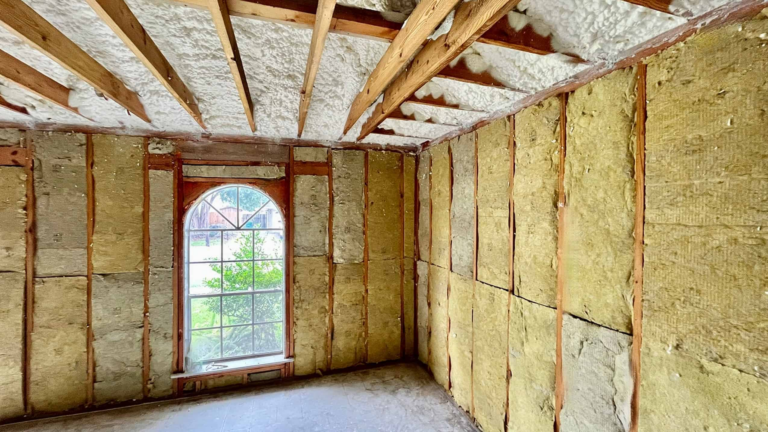
Introduction
Mineral wool insulation is a practical choice for homeowners who want better comfort, sound control, and fire performance. It can be used in walls, ceilings, floors, basements, and some attic spaces. At The Green Cocoon, insulation choices are based on the needs of each property, including the building’s condition, available space, energy goals, and budget. Understanding how mineral wool works can help you decide if it fits your project.
Key Takeaways
Mineral wool can offer several useful features in one material. It slows heat movement, helps control sound, and resists high temperatures. It comes in different thicknesses and forms for many building areas. Good results still depend on proper fitting, air sealing, and choosing the right product for the space.
- Supports thermal comfort
- Helps reduce sound transfer
- Provides strong fire resistance
- Fits many wall and ceiling applications
- Comes in several thicknesses and forms
What Is Mineral Wool Insulation?
Mineral wool insulation is made from mineral-based materials that are heated and formed into fine fibers. The fibers are arranged into batts, boards, or other insulation products. Homeowners may also see the terms rock wool insulation and stone wool insulation when comparing products. These names are commonly used for rock-based mineral fiber insulation. Always check the product details because thickness, density, and intended use can vary.
How Does Mineral Wool Work?
The fibers and spaces within them slow heat movement. This helps reduce winter heat loss and summer heat gain. Mineral wool can also absorb sound, which makes it useful for interior walls. Insulation is not the same as air sealing, so gaps around windows, doors, wiring, and pipes may still need attention.
What Are the Benefits of Mineral Wool Insulation?
The benefits of mineral wool insulation go beyond temperature control. Homeowners often choose it for thermal protection, sound control, and fire performance. It can fit snugly between framing members and comes in products for different spaces. It can be especially useful during construction or remodeling when wall and ceiling cavities are open.
- Good resistance to heat transfer
- Useful sound absorption
- Strong resistance to high heat
- Several thickness options
- Suitable for many framed spaces
Is Mineral Wool Good for Fire Protection?
Fire performance is one reason mineral wool is considered for residential projects. Its mineral fibers can withstand high temperatures, making it useful where fire resistance matters. It can be placed in walls, floors, and ceilings when the design calls for it. However, insulation alone does not make a home fireproof. The full assembly, including framing and finishes, affects fire safety.
Can Mineral Wool Reduce Noise?
Mineral wool can reduce unwanted sound because its dense fibers absorb some sound energy. It can be useful between bedrooms, living areas, offices, and other rooms where privacy matters. It may also reduce noise through floors and ceilings. Still, insulation cannot block every sound alone. Doors, windows, drywall, framing, and air gaps also affect noise.
Where Does Sound Control Help?
Sound control is useful in rooms that share walls or floors with busy areas. Mineral wool may reduce everyday sounds such as voices, television, and movement. It will not create a silent room, but it can improve comfort when combined with a well-designed assembly. Good fitting matters because gaps can create paths for sound to travel around the insulation.
Understanding the R-Value
R-value describes how strongly insulation resists heat flow. A higher R-value generally provides greater resistance, but the best level depends on climate, location, space, and project needs. When comparing mineral wool products, do not look at the number alone. Thickness, installation quality, gaps, compression, and building condition can affect performance.
Does Higher R-Value Always Mean Better?
Not always. The insulation must fit the space correctly. Forcing a thick batt into a cavity that is too shallow can create an uneven installation. A product that fits the space properly may perform better than a higher-rated product that is badly installed. The goal is to choose an appropriate R-value for the location and create
continuous coverage with as few gaps as possible.
Where Can Mineral Wool Be Used?
Mineral wool can work in many parts of a home. Batts are often used in framed walls, while boards may suit other applications. The right product depends on the space, exposure, thickness, and construction details. Common areas include walls, ceilings, floors, basements, crawlspaces, and selected attic spaces. A professional can help identify the best areas for an upgrade.
- Interior and exterior walls
- Ceilings and floors
- Basement and crawlspace areas
- Attic floors or selected roof areas
- Shared walls where sound control matters
Is Mineral Wool Suitable for Attics?
Mineral wool can suit some attic projects, but the approach depends on the attic design. An unfinished attic floor differs from a finished attic or insulated roofline. Before adding material, check for leaks, moisture, air leakage, and existing insulation problems. Insulation should work with ventilation and the air barrier rather than cover an issue that needs repair.
For some homes, cellulose insulation for attic projects may be another option. The best choice depends on the structure, access, and budget. Comparing materials before installation can help avoid an expensive change later.
Mineral Wool for Walls and Remodeling
Walls are a common place for mineral wool because batts can fit between studs. This works well when framing is open during construction or remodeling. In an older property, installers may find uneven framing, old wiring, plumbing, moisture damage, or limited cavity depth. These conditions should be checked before insulation is installed. Fixing problems first can protect the material and improve results.
How Much Does Mineral Wool Insulation Cost?
The cost of mineral wool depends on project size, thickness, labor, access, and preparation. A single wall can cost far less than insulating an entire home. Removing old material, repairing framing, or working around wiring and plumbing can increase labor time. Homeowners should request detailed estimates that explain the product, coverage area, preparation, and installation.
Several factors can change the final cost:
- Total square footage
- Product thickness and R-value
- Type of mineral wool
- Ease of access
- Existing insulation and damage
- Labor and preparation
How Is Mineral Wool Installed?
Installation begins by measuring the cavity and choosing a product that fits. Batts are cut where needed and placed between framing members. The material should fit closely without large gaps or excess compression. Areas around pipes, wires, and other obstacles need care. Before walls or ceilings are closed, the installer should check for missed spaces and uneven coverage.
If you search for rock wool insulation near me, compare contractors by experience, project details, and the quality of the estimate rather than price alone.
Mineral Wool vs Other Insulation Options
Mineral wool is one of several choices available. Fiberglass can suit budget-focused projects, cellulose can work in certain attics and walls, and spray foam may help when insulation and air sealing are both needed. Each material has strengths and limits. The right choice depends on the space, comfort goals, sound needs, moisture conditions, installation method, and budget.
Is Mineral Wool Right for Your Home?
Mineral wool can be a strong choice when you want a combination of thermal insulation, sound control, and fire resistance. It can work well in walls, ceilings, floors, basements, and selected attic applications. The decision should consider your home’s construction, available space, moisture conditions, energy goals, and budget. Proper installation matters as much as the material itself.
Final Thoughts
Mineral wool insulation offers a useful balance of thermal comfort, sound control, and fire performance. It can be a practical option for homeowners, builders, and remodelers who want insulation that serves more than one purpose. It can also support a balanced insulation plan when several home needs overlap.
Before choosing it, consider the R-value, available space, air sealing, moisture conditions, sound goals, and total project cost. With the right product and careful installation, mineral wool can become a valuable part of a comfortable home.
Ready to improve your home’s insulation? Contact The Green Cocoon today for professional guidance and help choosing the right insulation approach for your property.