


Choosing the right insulation is one of the most important decisions homeowners can make when improving energy efficiency and indoor comfort. Proper insulation helps regulate indoor temperatures, reduce heating and cooling strain, and create a healthier living environment throughout the year. Among the most common insulation options available today, fiberglass and cellulose remain two of the most widely used materials for residential properties. At The Green Cocoon, homeowners are increasingly comparing these two insulation types to determine which one offers stronger long term performance and greater energy savings.
While both insulation materials provide thermal protection, they perform very differently in terms of air sealing, environmental impact, durability, and temperature stability. Understanding how each material works helps homeowners make informed decisions based on their home’s structure, climate conditions, and efficiency goals.
Why Insulation Plays a Major Role in Energy Efficiency
Many homes lose significant amounts of heated and cooled air through attics, walls, crawl spaces, and hidden structural gaps. Without proper insulation, HVAC systems work harder to maintain indoor comfort, leading to higher energy use and inconsistent temperatures throughout the home.
Well installed insulation creates a stronger thermal barrier that helps stabilize indoor conditions year round.
Important insulation benefits include:
- Better indoor temperature stability that improves comfort in every season
- Reduced heating and cooling strain that helps HVAC systems operate more efficiently
- Lower monthly utility costs that support long term household savings
- Improved indoor air quality that helps reduce unwanted outdoor airflow
- Reduced drafts and cold spots that make rooms feel more comfortable
- Better overall home efficiency that supports long term energy performance
Because insulation impacts so many aspects of home comfort, choosing the right material is essential for long term results.
Understanding the Difference Between Fiberglass and Cellulose
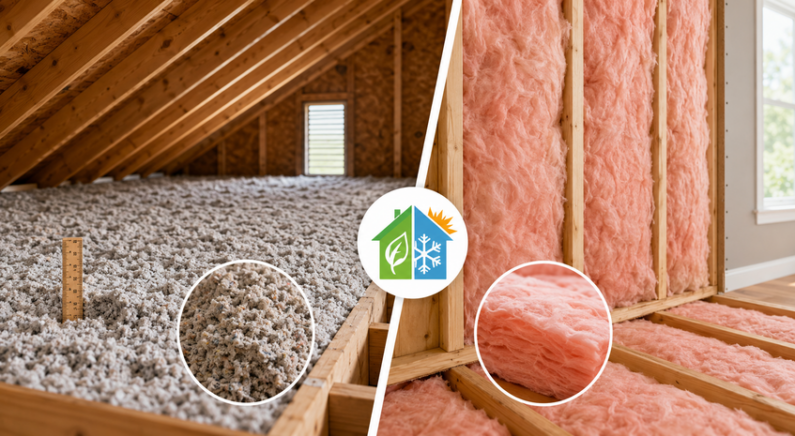
Fiberglass and cellulose insulation may serve the same purpose, but they differ greatly in material composition, installation methods, and overall performance. Fiberglass insulation is made from fine glass fibers, while cellulose is primarily created from recycled paper products treated for fire resistance and durability.
These structural differences influence how effectively each material controls airflow and maintains insulation performance over time.
Key differences between the two materials include:
- Fiberglass is manufactured from spun glass fibers that trap pockets of air
- Cellulose is produced from recycled paper products treated with protective additives
- Fiberglass is available in batt and loose fill forms for multiple installation methods
- Cellulose is commonly blown into attics and wall cavities for dense coverage
- Fiberglass tends to allow more airflow when gaps or compression occur
- Cellulose settles tightly into irregular spaces for stronger air sealing performance
Understanding these differences helps homeowners select the most suitable insulation system for their property.
Thermal Performance Influences Long Term Efficiency
Insulation performance is often measured using R value, which indicates how effectively a material resists heat transfer. Higher R values generally provide stronger thermal protection and improved energy efficiency.
Cellulose insulation typically offers a slightly higher R value per inch compared to fiberglass, especially in attic applications where consistent thermal performance matters most.
Advantages of stronger thermal resistance include:
- Better winter heat retention that keeps homes warmer during colder months
- Improved summer cooling protection that reduces indoor heat buildup
- More consistent indoor temperatures that improve overall comfort
- Reduced HVAC workload that supports energy savings throughout the year
- Better protection against seasonal temperature swings in changing climates
- Improved long term energy performance that benefits overall home efficiency
For homeowners focused on maximizing thermal performance, insulation value becomes a major factor in material selection.
Air Sealing Can Dramatically Affect Energy Savings
One of the biggest differences between fiberglass and cellulose is how effectively each material limits airflow. Small air leaks around pipes, wiring, framing, and attic penetrations can significantly reduce overall insulation efficiency.
Cellulose insulation naturally settles into irregular cavities and narrow openings more effectively than traditional batt insulation.
Benefits of stronger air sealing include:
- Reduced conditioned air loss that improves heating and cooling efficiency
- Better protection against drafts that create uneven indoor temperatures
- Improved humidity control that supports healthier indoor environments
- More stable airflow throughout the home that enhances comfort
- Reduced energy waste caused by hidden structural air leaks
- Better overall insulation effectiveness across difficult to reach areas
Many homeowners choosing cellulose insulation for attic applications appreciate its ability to create denser and more continuous coverage.
Fiberglass Remains Popular for Budget Focused Projects
Fiberglass insulation continues to be one of the most commonly used insulation materials because of its affordability and widespread availability. It is often selected for projects where budget flexibility is limited.
When installed carefully, fiberglass can still provide reliable thermal performance in many residential applications.
Advantages of fiberglass insulation include:
- Lower upfront material costs that help reduce initial project expenses
- Flexible installation options that work in walls, attics, and floors
- Lightweight handling that simplifies installation in many spaces
- Availability in batt and loose fill forms for different project needs
- Reliable thermal performance when installed without gaps or compression
- Broad product accessibility through many insulation suppliers and contractors
Homeowners considering insulation with fiberglass often focus on balancing energy efficiency with installation affordability.
Cellulose Offers Stronger Environmental Benefits
Many homeowners today prioritize environmentally conscious building materials when improving their homes. Cellulose insulation stands out because it is made primarily from recycled paper products and requires less energy during manufacturing.
This makes cellulose one of the more sustainable insulation options available for residential properties.
Environmental advantages of cellulose include:
- High recycled material content that supports environmentally responsible construction
- Lower manufacturing energy requirements compared to glass based products
- Reduced environmental impact through sustainable material sourcing
- Strong thermal performance that helps reduce household energy waste
- Long lasting efficiency that supports long term sustainability goals
- Better support for eco conscious home improvement strategies
Many homeowners researching green fiber cellulose insulation are specifically interested in balancing energy efficiency with environmental responsibility.
Temperature Stability Matters During Seasonal Extremes
Homes in colder climates often experience significant temperature swings during winter and summer months. Insulation materials that maintain consistent thermal performance during extreme conditions help improve indoor comfort and energy efficiency.
Cellulose insulation generally maintains its thermal performance more consistently during severe temperature changes.
Advantages of stable insulation performance include:
- Better protection during freezing winter conditions that challenge heating systems
- More reliable summer cooling efficiency that limits heat transfer
- Improved indoor comfort during rapid seasonal temperature fluctuations
- Reduced thermal gaps that can weaken insulation effectiveness
- Better long term energy savings throughout changing weather conditions
- More dependable performance in older homes with uneven framing cavities
For homeowners in colder regions, temperature stability can significantly influence insulation performance over time.
Moisture Conditions Affect Both Materials
Moisture exposure can reduce the effectiveness of many insulation materials if proper ventilation and air sealing are not maintained. Attics, basements, and crawl spaces often require careful moisture management to prevent insulation deterioration.
Neither fiberglass nor cellulose performs well in areas with ongoing water intrusion or excessive humidity.
Important moisture considerations include:
- Proper attic ventilation that helps prevent trapped humidity buildup
- Air sealing around penetrations that limits moisture infiltration
- Basement moisture control that protects insulation materials from water damage
- Roof condition monitoring that reduces leak related insulation problems
- Crawl space sealing strategies that help stabilize humidity levels
- Balanced airflow systems that support long term insulation durability
Homes with severe moisture exposure may require alternative insulation methods for certain areas.
Installation Quality Has a Major Impact on Results
Even high quality insulation materials may underperform if installation is incomplete or inconsistent. Gaps, compression, poor air sealing, and uneven coverage can all reduce overall efficiency.
Professional installation helps ensure insulation systems perform at their full potential.
Benefits of professional installation include:
- Accurate insulation depth that supports stronger thermal performance
- Better coverage consistency that reduces energy loss throughout the home
- Reduced installation gaps that weaken insulation effectiveness over time
- Improved air sealing around framing, wiring, and structural penetrations
- Better long term durability that helps maintain insulation performance
- Safer installation practices that support healthier indoor conditions
Experienced contractors understand how to maximize insulation efficiency based on home structure and climate conditions.
Attic Applications Often Favor Cellulose Performance
Attics are one of the most important areas for insulation upgrades because large amounts of heat escape through poorly insulated roof structures. Dense blown in cellulose often performs especially well in attics because it settles evenly across irregular surfaces and difficult framing areas.
Benefits of attic focused insulation upgrades include:
- Better heat retention during winter months that improves comfort
- Reduced cooling loss during summer weather that lowers HVAC strain
- Improved attic airflow management that supports healthier indoor conditions
- Better coverage across uneven attic framing and hidden gaps
- Increased energy savings through stronger thermal protection
- Reduced drafts throughout upper living spaces that improves comfort levels
Many homeowners choose cellulose insulation for attic projects because of its strong coverage and reliable long term performance.
Choosing the Best Option for Your Home
The best insulation choice depends on the home’s structure, climate conditions, budget expectations, and long term efficiency goals. Some homeowners prioritize affordability and flexibility, while others focus more on stronger air sealing and environmental benefits.
Before selecting an insulation system, homeowners should evaluate:
- Existing insulation condition and overall home efficiency needs
- Moisture exposure levels that may affect insulation durability
- Desired indoor comfort improvements throughout every season
- Long term energy savings goals for heating and cooling efficiency
- Environmental preferences related to sustainable building materials
- Installation quality and contractor experience for long term performance
You can also learn more through this helpful guide on spray foam vs cellulose vs fiberglass insulation.
Build a More Comfortable and Efficient Home
Both fiberglass and cellulose insulation offer valuable benefits for homeowners looking to improve energy efficiency and indoor comfort. Fiberglass remains a practical option for budget conscious projects, while cellulose provides stronger air sealing, improved thermal stability, and greater environmental advantages for many homes.
The Green Cocoon helps homeowners choose insulation solutions designed to improve comfort, efficiency, and long term energy savings. Whether you are upgrading an attic, walls, or the entire home, contact us today to learn more about the right insulation strategy for your property.
Frequently Asked Questions
Which insulation is more energy efficient, fiberglass or cellulose?
Cellulose generally provides stronger air sealing and slightly higher thermal performance, which can improve overall energy efficiency.
Does fiberglass insulation lose effectiveness over time?
Fiberglass can lose performance if it becomes compressed, damaged, or exposed to moisture and airflow gaps.
Is cellulose insulation environmentally friendly?
Yes, cellulose insulation is made primarily from recycled materials and is considered one of the more sustainable insulation options.
Which insulation works best in attics?
Many homeowners prefer cellulose for attics because it settles into irregular spaces and provides strong coverage.
Can insulation help reduce utility bills?
Yes, proper insulation helps reduce heat transfer and improves HVAC efficiency, which can lower energy costs over time.