


Choosing the right insulation can make a major difference in your home’s comfort, energy efficiency, and long term maintenance costs. Homeowners today are looking for insulation solutions that not only lower utility bills but also improve indoor air quality and reduce moisture problems. Spray foam insulation has become one of the most effective options available because of its strong thermal performance and air sealing capabilities. At The Green Cocoon, homeowners are learning that understanding the differences between open and closed cell spray foam is the key to making the right investment for their property.
Both insulation types offer excellent benefits, but each performs differently depending on the area being insulated, climate conditions, moisture exposure, and budget goals. Understanding how each option works can help homeowners choose the most effective solution for long term comfort and savings.
Why Spray Foam Insulation Is Growing in Popularity
Traditional insulation materials often leave small gaps and air leaks that reduce energy efficiency over time. Spray foam insulation expands after application, allowing it to fill cracks, corners, and hidden openings more effectively than many older insulation methods.
This creates a stronger thermal barrier that helps stabilize indoor temperatures throughout the year. Homeowners are increasingly choosing spray foam because it improves comfort while helping HVAC systems operate more efficiently.
Benefits of spray foam insulation include:
- Strong air sealing performance
- Improved indoor temperature control
- Reduced energy waste
- Better moisture management
- Increased home comfort
- Long lasting insulation performance
Because of these advantages, spray foam continues to become a preferred insulation solution for modern and older homes alike.
Understanding the Difference Between Open and Closed Cell Foam
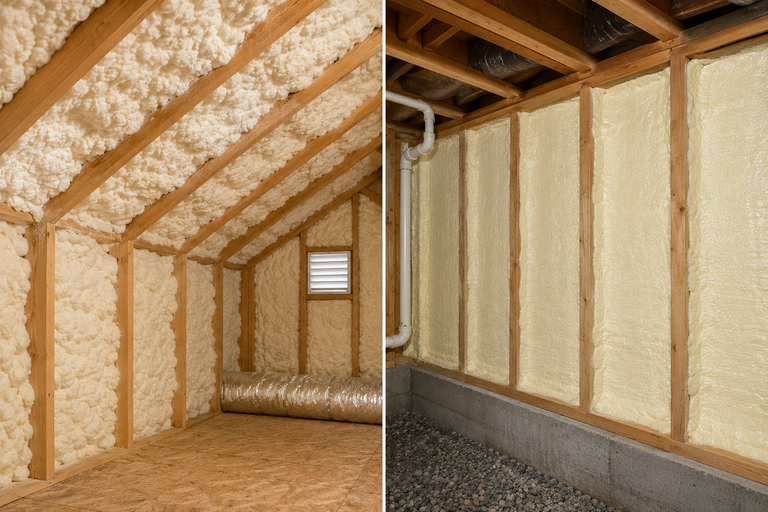
Although both products are spray foam insulation, they differ greatly in density, structure, and overall performance. Open cell foam contains tiny cells that remain partially open, giving it a softer and more flexible texture. Closed cell foam contains tightly packed sealed cells that create a denser and more rigid material.
These structural differences impact insulation value, sound reduction, moisture resistance, and installation cost. Choosing the right type depends on the specific goals of the project.
Key comparison areas include:
- Insulation performance
- Moisture resistance
- Sound absorption
- Structural strength
- Installation flexibility
- Budget considerations
Understanding these distinctions helps homeowners make informed decisions based on their home’s needs.
Open Cell Foam Expands to Fill Large Spaces
Open cell spray foam is known for its ability to expand significantly after application. This allows it to fill large cavities and irregular spaces with ease, making it highly effective for interior walls and attic applications.
Its lightweight structure creates excellent coverage while helping reduce airflow throughout the home.
Advantages of open cell foam include:
- Excellent expansion capability
- Effective gap coverage
- Strong sound absorption
- Flexible application performance
- Lower installation cost
- Improved indoor comfort
Many homeowners choose open cell foam insulation for interior applications where sound control and broad coverage are priorities.
Closed Cell Foam Delivers Higher Insulation Power
Closed cell foam is much denser than open cell foam and offers a higher insulation value per inch. This makes it ideal for areas where maximum thermal performance is needed within limited space.
Its rigid structure also adds strength and durability to walls, ceilings, and roofing systems.
Benefits of closed cell foam include:
- Higher thermal resistance
- Strong moisture barrier
- Improved structural support
- Excellent durability
- Better water resistance
- Increased energy efficiency
Many professionals recommend closed cell spray insulation for crawl spaces, basements, exterior walls, and roofing applications exposed to moisture.
Sound Reduction Is One of Open Cell Foam’s Biggest Advantages
One major reason homeowners choose open cell foam is its ability to reduce indoor noise transfer. The softer structure helps absorb sound waves more effectively than denser insulation materials.
This makes it especially useful for interior spaces where quieter living environments are important.
Areas commonly insulated for sound control include:
- Home offices
- Media rooms
- Bedrooms
- Shared interior walls
- Multi level homes
- Laundry areas
The sound dampening performance of open cell foam can significantly improve everyday comfort in busy households.
Moisture Protection Makes Closed Cell Foam Ideal for Damp Areas
Moisture control is one of the strongest advantages of closed cell spray foam. Its tightly sealed structure helps block water penetration while limiting moisture movement through walls and ceilings.
This makes it highly effective for areas prone to humidity, condensation, or water exposure.
Moisture resistant applications include:
- Crawl spaces
- Basements
- Roof decks
- Exterior walls
- Coastal environments
- High humidity regions
Closed cell foam often performs better in challenging environmental conditions where water resistance is critical.
Budget Considerations Influence Many Homeowners
Cost is an important factor when choosing between insulation options. Open cell foam generally costs less because it uses fewer raw materials and expands more during installation.
Closed cell foam requires more material and provides higher insulation density, which increases installation costs.
Budget related differences include:
- Lower upfront cost for open cell
- Higher thermal value for closed cell
- Different installation thickness needs
- Varying long term energy savings
- Material density differences
- Project size considerations
Homeowners should balance upfront investment with long term performance goals when comparing options.
Structural Strength Is Another Key Difference
Closed cell foam offers additional structural support because of its rigid composition. Once cured, it can strengthen certain wall and roof assemblies while helping resist shifting and moisture damage.
Open cell foam remains softer and more flexible after installation, making it less suitable for structural reinforcement.
Structural advantages of closed cell foam include:
- Increased wall rigidity
- Better roof reinforcement
- Enhanced durability
- Improved impact resistance
- Stronger long term stability
- Better weather resistance
These benefits make closed cell foam a strong choice for demanding building environments.
Climate Conditions Affect Insulation Performance
Climate plays a major role in determining which insulation type performs best. Homes located in humid or colder climates often require stronger moisture control and higher insulation values.
Warmer climates may prioritize airflow management and sound reduction instead.
Climate related considerations include:
- Humidity exposure
- Seasonal temperature swings
- Ice dam prevention
- Moisture management needs
- Heating efficiency goals
- Cooling performance priorities
Professional evaluations help homeowners choose insulation that aligns with local environmental conditions.
Installation Quality Matters Just as Much as Material Choice
Even high quality insulation products may underperform if they are not installed correctly. Proper application thickness, air sealing, and ventilation planning all contribute to overall insulation effectiveness.
Experienced professionals understand how to apply spray foam safely and efficiently while minimizing installation issues.
Benefits of professional installation include:
- Proper foam expansion
- Accurate coverage thickness
- Reduced installation gaps
- Better moisture control
- Improved long term efficiency
- Safer application process
Many homeowners rely on experienced spray foam insulation contractors to ensure the insulation performs as expected over time.
Spray Foam Helps Lower Long Term Energy Costs
One of the biggest reasons homeowners invest in spray foam insulation is long term energy savings. By reducing heat transfer and minimizing air leaks, spray foam helps HVAC systems operate more efficiently.
This can result in lower heating and cooling expenses throughout the year.
Energy saving advantages include:
- Reduced HVAC workload
- Better indoor temperature stability
- Lower monthly utility bills
- Improved home efficiency
- Reduced energy waste
- Increased year round comfort
Over time, these savings can help offset the initial installation investment.
Choosing the Right Areas for Installation
Different areas of the home may benefit from different types of spray foam insulation. Some homeowners even combine both products depending on the project goals and structure.
Common installation areas include:
- Attics
- Crawl spaces
- Exterior walls
- Basements
- Interior partitions
- Roof assemblies
Many companies offering spray foam insulation services help homeowners determine which insulation type works best for each specific area.
How to Decide Which Option Is Better for Your Home
The best insulation choice depends on your priorities, home structure, and environmental conditions. Homeowners focused on sound reduction and lower upfront costs may prefer open cell foam. Those prioritizing moisture control, structural strength, and higher insulation performance may benefit more from closed cell foam.
Before making a decision, homeowners should evaluate:
- Climate conditions
- Moisture exposure
- Available wall space
- Energy efficiency goals
- Budget expectations
- Long term maintenance needs
You can also learn more through this detailed guide on closed cell vs open cell spray foam insulation.
Upgrade Your Home With the Right Insulation Solution
Choosing between open and closed cell spray foam does not come down to one option being universally better than the other. Each insulation type offers unique advantages that support different home designs, climates, and performance goals.
The Green Cocoon helps homeowners identify the right insulation solutions for improved comfort, energy efficiency, and long term savings. Whether you are insulating an attic, basement, crawl space, or entire home, contact us today to discover the best spray foam solution for your property.
Frequently Asked Questions
Which spray foam insulation has the higher R value?
Closed cell spray foam generally has a higher R value per inch compared to open cell foam, making it more efficient in smaller spaces.
Is open cell spray foam good for soundproofing?
Yes, open cell foam is widely used for sound reduction because its softer structure helps absorb noise effectively.
Can closed cell foam prevent moisture problems?
Closed cell foam provides strong moisture resistance and can help reduce water penetration in damp environments.
How long does spray foam insulation last?
Spray foam insulation can last for many years when installed correctly and maintained properly.
Is spray foam insulation worth the cost?
Many homeowners find spray foam worth the investment because of its long term energy savings, comfort improvements, and air sealing performance.